What is the Celestial "Wobble"?
To understand the precession of the equinoxes, one must first imagine the Earth not as a perfectly spinning top, but as one that is slightly off-balance. This phenomenon, known as axial precession, is a slow, continuous gravity-induced change in the orientation of Earth's rotational axis.
Much like a spinning toy top that begins to trace a circle with its stem as it slows down, Earth's axis undergoes a similar motion. This "wobble" is caused primarily by the gravitational pull of the Sun and the Moon on Earth's equatorial bulge.
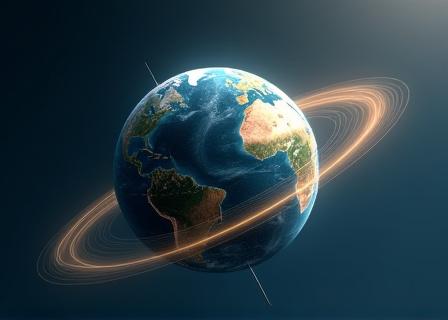
Tracing the North Star Through Time
One of the most fascinating consequences of this cycle is that our "North Star" is not permanent. Currently, Polaris sits near the celestial pole, but this has not always been the case:
- 5,000 years ago: The star Thuban in the constellation Draco was the pole star.
- 12,000 years from now: The brilliant star Vega will take over the mantle.
The Great Year and Astrological Ages
A full cycle of precession takes approximately 25,772 years—a period often referred to as a "Great Year." In historical and cultural astrology, this cycle is divided into twelve "Ages" corresponding to the zodiac constellations.
"Because of precession, the vernal equinox point moves backward through the zodiac constellations at a rate of approximately one degree every 72 years."
The Age of Pisces
Characterized historically by the rise of global religions and maritime exploration, this age is shifting as the equinox point leaves the constellation of the Fish.
The Age of Aquarius
Often associated with the democratization of information, technological advancement, and humanitarianism as the equinox point moves into the Water Bearer.
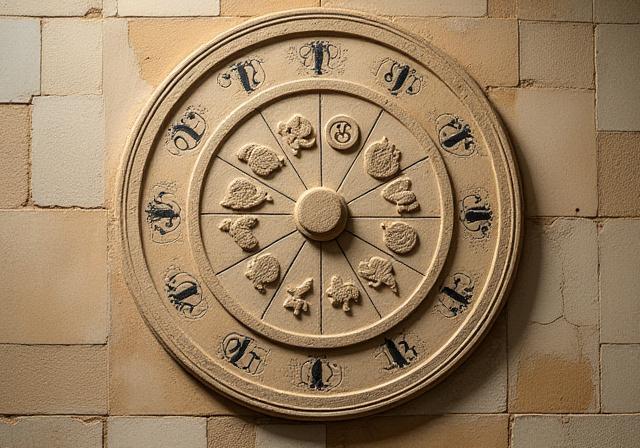
The transition between ages is a gradual process affecting cultural shifts over centuries.